Krishna Janmashtami: The Story, Significance and Simple Rituals to Raise Your Energy
Krishna Janmashtami: why this night still matters
Krishna Janmashtami (September 4th, 2026) is the night Hindus around the world celebrate the birth of Lord Krishna. It falls on the eighth day, or Ashtami, of the dark fortnight in the month of Bhadrapada, which usually lands in August or September. This is not just a date on a calendar. It marks the moment when, according to Vedic tradition, the divine stepped into a prison cell in Mathura and changed the course of history.
If you grew up with this festival, you probably remember the midnight aarti, the sound of conch shells, and the smell of ghee lamps burning through the night. If you are discovering it for the first time, think of it as a story about hope arriving exactly when things look hopeless. That is the heart of Krishna Janmashtami.
The Krishna birth story, told simply
To understand Krishna Janmashtami, you need to understand why Krishna was born in a jail.
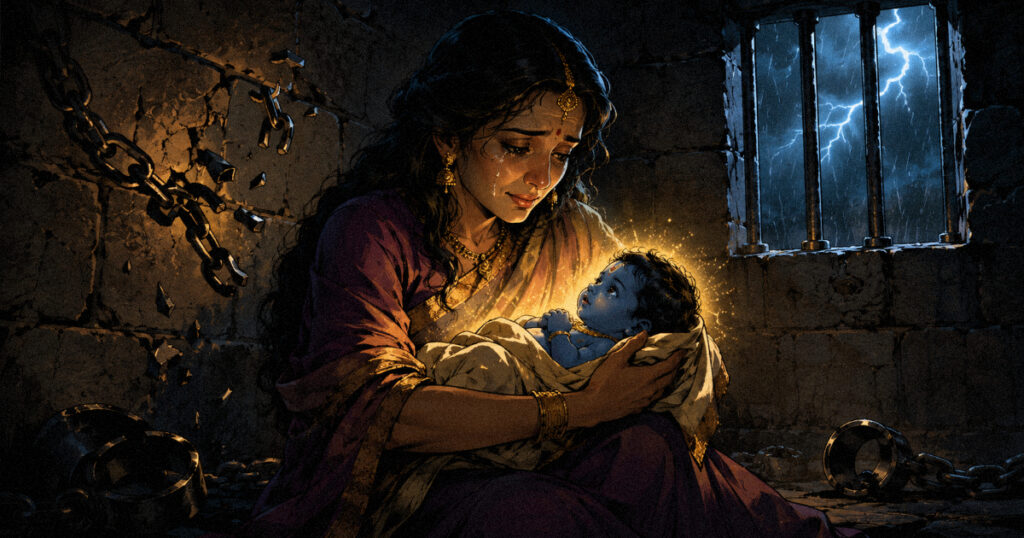
Krishna’s maternal uncle was King Kansa of Mathura, a ruler who had grown cruel and paranoid. A voice from the heavens warned Kansa that the eighth child of his sister Devaki would be the one to end his life. Instead of accepting his fate with any grace, Kansa locked Devaki and her husband Vasudeva in a prison and killed each child as it was born.
When the eighth child arrived, something extraordinary happened. It was the middle of the night, on Ashtami, and the moon was in Rohini nakshatra. The prison guards fell asleep, the chains on Vasudeva loosened by themselves, and the doors opened on their own. Vasudeva carried the newborn Krishna through a storm and crossed the swollen Yamuna river to reach the home of Nanda and Yashoda in Gokul. He left Krishna there and returned with their newborn daughter, so that Kansa would be fooled.
This is why Janmashtami is celebrated at midnight. The exact hour of Krishna’s birth is treated as the most sacred moment of the night, and many devotees stay awake, fast, and do prayers right up until midnight strikes.
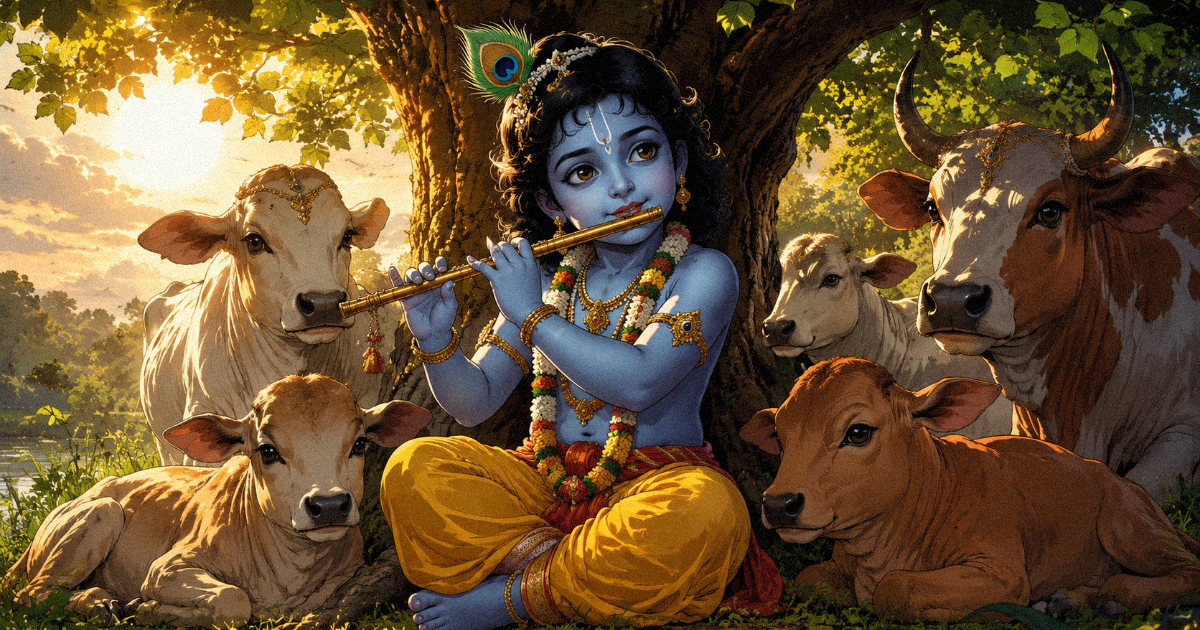
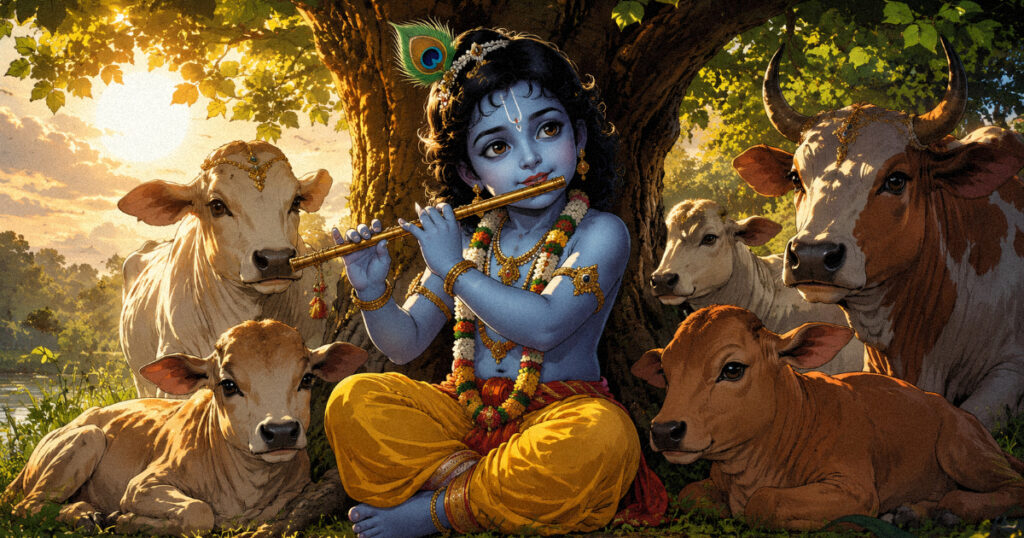
Krishna grew up in Vrindavan and Gokul as a cowherd boy loved by everyone, known for his mischief, his flute, and his deep bond with the gopis and cows. Later in life, he became the charioteer and guide of Arjuna in the battle of Kurukshetra, where he spoke the Bhagavad Gita, one of the most important spiritual texts in the world. Krishna is worshipped as the eighth avatar of Lord Vishnu, sent to earth to restore dharma when the world had tilted too far into darkness.
Krishna Janmashtami significance in Vedic astrology
This is where Krishna Janmashtami becomes even more interesting, because his birth chart itself carries meaning that Vedic astrologers still study today.
Krishna was born with the moon placed in Rohini nakshatra, which sits inside Vrishabha rashi, or Taurus. Rohini is ruled by the Moon and is considered one of the most beautiful and fertile nakshatras in the entire zodiac. It is associated with creativity, charm, material abundance, and a magnetic personal presence, all qualities that match the descriptions of Krishna as irresistibly attractive to everyone around him.
The specific combination of Ashtami tithi falling together with Rohini nakshatra is called Jayanti Yoga in Vedic astrology. This is considered an extremely rare and powerful combination, and it is why the festival is sometimes called Krishna Janmashtami significance by yoga rather than just a date. When this exact combination repeats in a year, it is seen as especially auspicious for spiritual practice.
Krishna was also born during the dark half of the lunar month, on the Krishna Paksha, which itself carries symbolism. Light being born out of darkness is not just poetic language here, it is built directly into the astrological timing of the festival. It quietly says that clarity and goodness can rise even from the most difficult conditions, and that no situation is too dark for transformation.
Midnight itself, the exact moment of birth, is treated in Vedic thought as a time when the veil between the material world and the divine is at its thinnest. This is part of why devotees choose to stay awake and alert through the night instead of sleeping through it.
How to elevate your energy on Krishna Janmashtami
You do not need an elaborate ritual setup to feel the benefit of this night. Here are grounded, doable practices that people actually follow.
Fast with intention, not just restriction
Many people observe a full or partial fast until midnight. If fasting completely does not suit your body, even eating light, sattvic food like fruits and milk products through the day keeps the same intention alive. The point is not punishment, it is creating space and lightness in the body so the mind can settle.
Stay up until midnight for the Nishita Puja
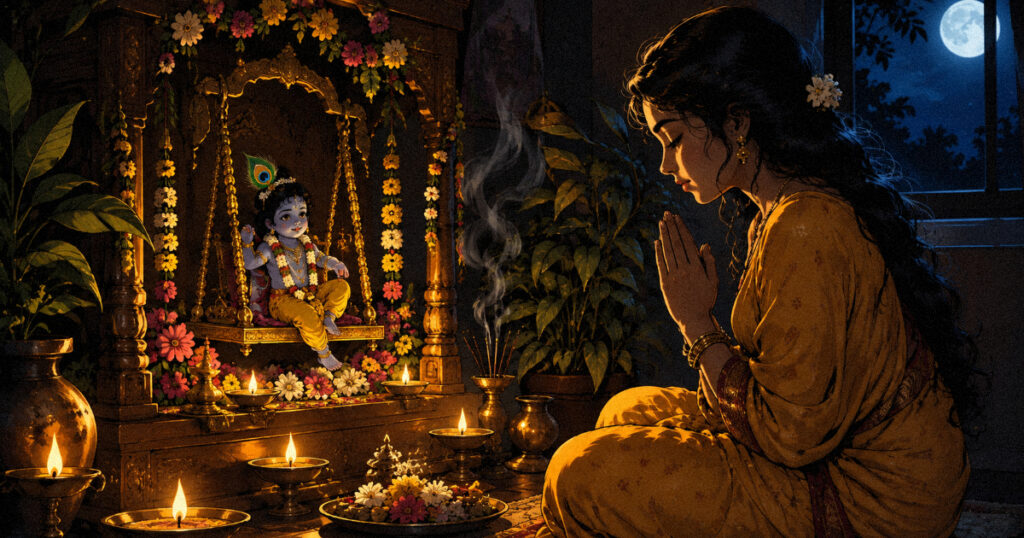
This is the prayer done at the exact hour believed to be Krishna’s birth time. Even a simple version works: light a diya, sit quietly, and chant “Om Namo Bhagavate Vasudevaya” or simply sing a bhajan you know. The stillness of a late night home, away from noise and screens, has a way of settling the mind on its own.
Read or listen to a few verses of the Bhagavad Gita
You do not need to read the whole text. Even one chapter, or even just a few verses about steady action without attachment to results, connects you directly to what Krishna actually taught, beyond the festival decorations.
Clean and light up your space
A tidy home with a few diyas lit is not just tradition, it genuinely shifts how a space feels. This is a small, physical way of preparing your environment to feel calmer and more receptive.
Take part in Dahi Handi if it is around you
In many parts of India, especially Maharashtra, the next day involves human pyramids trying to break a pot of curd hung high up, recreating young Krishna’s love for stolen butter and curd. It is joyful, communal, and a good reminder that spirituality does not always need to be solemn.
Sit with the idea of surrender
A quiet way to mark the night is to reflect on one area of your life where you are gripping too tightly, and consciously loosen that grip, the way Krishna teaches Arjuna to act without obsessing over outcomes.
A simple way to close the night
Krishna Janmashtami is really a story about timing, patience, and trust that things arrive when they are meant to, even if that moment looks like a locked prison cell in the middle of a storm. Whether you fast, stay up till midnight, read a page of the Gita, or simply light one diya and sit in silence for a few minutes, you are taking part in something that has been practiced with the same intention for thousands of years.
You do not need a large gathering or elaborate rituals to feel that. Sometimes the quietest midnight is the one that stays with you the longest.