Varalakshmi Vratam 2026: Meaning, Origin Story and Simple Daily Practice for Your Rising Sign
Varalakshmi Vratam is one of the most loved festivals for Goddess Lakshmi in the Hindu calendar. It falls every year on the Friday before Shravana Purnima, and in 2026, most South Indian panchangs place it on Friday, August 21. A few North Indian and Drik-Delhi calendars mark it a week later, on August 28, because of how the full moon tithi spans both dates this year. Either way, the spirit of the day stays the same. It is a day to invite abundance, peace, and grace into your home through the worship of Varalakshmi, the boon giving form of the Goddess.
In this post, we will look at what Varalakshmi Vratam actually means, where the tradition comes from, why it matters in Vedic thought, and then something practical. A simple daily practice for each of the 12 rising signs, so you can carry the energy of this day into your everyday life, not just one Friday a year.
What Is Varalakshmi Vratam
The word Vara means boon, and Lakshmi is the Goddess of wealth, prosperity, and wellbeing. So Varalakshmi simply means the Lakshmi who grants boons. She is worshipped as the wish fulfilling form of Mahalakshmi, the consort of Lord Vishnu, who is said to have emerged from the Kshira Sagara, the ocean of milk, during the great churning described in Hindu scriptures.
Varalakshmi Vratam is mainly observed by married women, though many unmarried women and even men take part with full devotion. The vrat is done for the health and long life of the husband, the peace of the household, and the general prosperity of the family. In parts of Tamil Nadu it is called Varalakshmi Nombu, in Karnataka it is Varamahalakshmi Habba, and in Andhra Pradesh and Telangana it stays close to its original name, Varalakshmi Vratam.
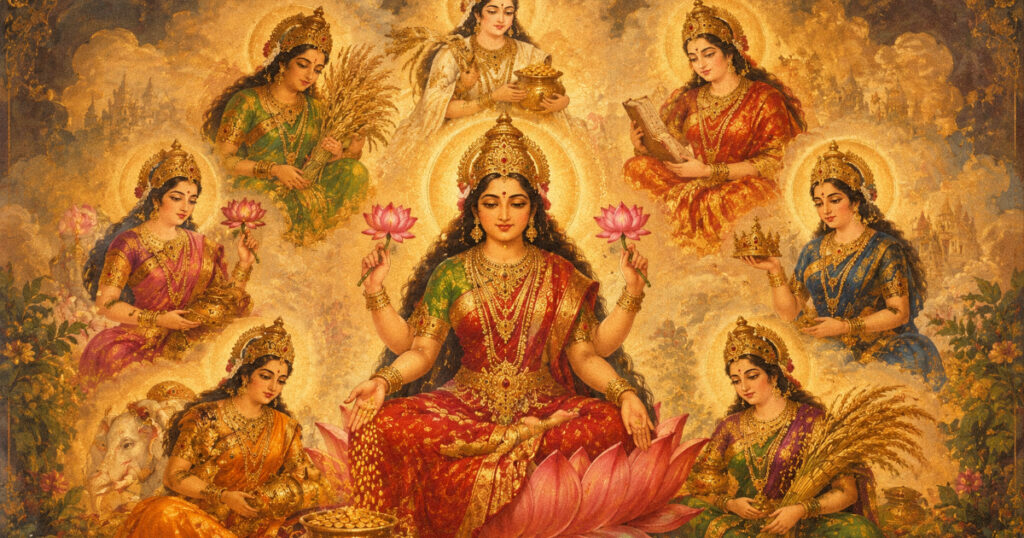
What makes this day special in Vedic thought is a simple belief. Worshipping Varalakshmi on this one day is considered equal to worshipping all eight forms of Lakshmi together, known as Ashtalakshmi. These eight forms are wealth, grain, courage, learning, love, fame, peace, and satisfaction. So in a single puja, a devotee is really asking for a full and balanced life, not just money.
The Origin Story of Varalakshmi Vratam
The most well known origin story comes from the Skanda Purana. It centres on a woman named Charumathi, who lived in a town called Kundinapuram with her husband and his family. Charumathi was known through the village for her devotion, her honesty, and her care for her elders.
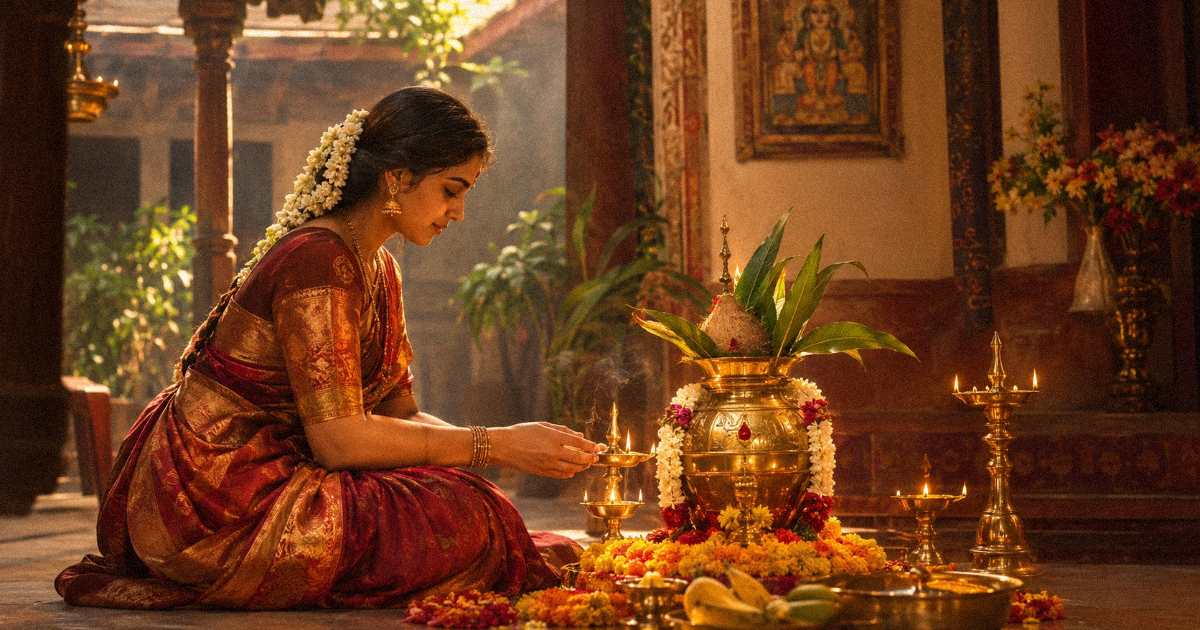
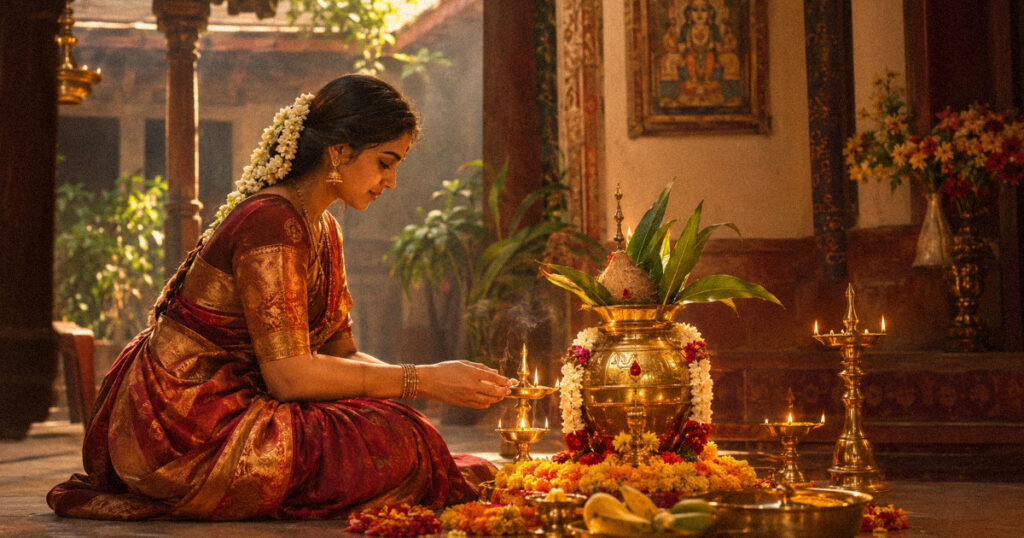
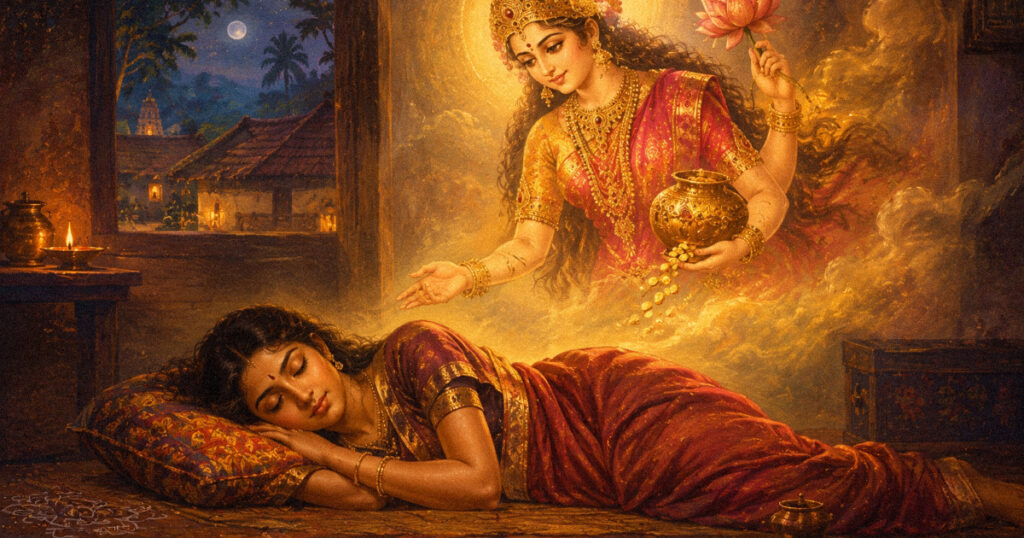
Pleased by her sincerity, Goddess Lakshmi appeared to Charumathi in a dream. The Goddess told her to observe a special vrat on the Friday before Shravana Purnima, and explained exactly how the puja should be done. When Charumathi woke up, she gathered the women of her village and performed the puja together, just as the Goddess had shown her. A decorated pot, called a kalasha, was dressed to represent the face and form of the Goddess. Turmeric, vermilion, mango leaves, and a coconut were used to complete the setup, almost like dressing a bride.
Once the puja was completed with full devotion, all the women who took part were blessed with wealth, health, and happiness in their homes. From that day, the story goes, Varalakshmi Vratam became a tradition passed down through generations of women across South India.
There is a second, lesser known story too, involving a person named Chitranemi, whose curse was lifted after he witnessed the vrat being performed with true devotion. Both stories carry the same message. Sincere devotion, even in a simple form, is enough to receive grace.
Why Vedic Astrology gives this day special weightage
In Vedic astrology, Friday, or Shukravara, belongs to the planet Venus, known as Shukra in Sanskrit. Venus governs comfort, beauty, relationships, and material pleasures, which is exactly what Lakshmi represents. This is why Friday is considered the most natural day for Lakshmi worship, and why Varalakshmi Vratam always falls on this weekday.
There is also a rule around lagna, or the rising sign, in electional astrology, which is the branch of Vedic astrology that decides the best timing for important rituals. It is believed that performing the Lakshmi puja during a fixed lagna, such as Simha, Vrishabha, Vrischika, or Kumbha rising, brings long lasting prosperity rather than something that comes and goes quickly. This is one reason many families check a panchang before starting the puja, to time it with a stable rising sign for the day.
Since the rising sign, or lagna, plays such an important role in this festival, it makes sense to also look at what each rising sign in Vedic astrology can personally do, not just on this one day, but as an ongoing practice to keep Lakshmi’s blessings steady in daily life.
A Simple Daily Practice for Each Rising Sign
In Vedic astrology, your rising sign, also called lagna, shapes how you approach the world and where you naturally need support. Below is one simple, doable practice for each rising sign that you can start today, on Varalakshmi Vratam, and continue as a small daily habit.
Aries Rising
Aries rising can be quick to spend energy and money without pausing. A simple practice is to light one lamp near your entrance every evening and say thank you for what already came to you that day, before asking for anything new.
Taurus Rising
Taurus rising already carries a natural closeness to Lakshmi, since Venus rules this sign. Keep your money space, your purse, or your worktable clean and clutter free every single day. This one habit keeps abundance flowing instead of getting stuck.
Gemini Rising
Gemini rising benefits from steady, repeated action rather than scattered effort. Chant or quietly repeat the simple phrase Om Shreem Mahalakshmyai Namah nine times each morning before starting your day.
Cancer Rising
Cancer rising is deeply connected to home and emotional security. Keep a small bowl of clean water with a few grains of rice near your kitchen or main door, and change it every morning as an offering to the Goddess.
Leo Rising
Leo rising carries natural leadership and warmth. Since Leo, or Simha, is one of the fixed lagnas considered auspicious for Lakshmi worship, a short daily gratitude practice works well. Speak out loud three things you are grateful for before you check your phone in the morning.
Virgo Rising
Virgo rising tends to focus on flaws and what is missing. A helpful daily practice is to offer a flower, even a single one, at a small altar or picture of the Goddess, as a reminder to notice what is already whole and good.
Libra Rising
Libra rising is ruled by Venus itself, the same planet connected to Lakshmi and to Friday. Keep your personal space, especially where you sleep, well lit and pleasant smelling, since Libra thrives on balance and beauty as a form of worship.
Scorpio Rising
Scorpio rising, another fixed sign favoured for Lakshmi puja, benefits from releasing what it holds too tightly. Practice giving away one small thing daily, whether it is food, an old item, or a kind word to someone in need.
Sagittarius Rising
Sagittarius rising is generous but can be careless with routine. Set a fixed time each day, even five minutes, to sit quietly and connect with gratitude before moving into your busy schedule.
Capricorn Rising
Capricorn rising works hard for security but can forget to pause and receive. Each evening, before ending your workday, take one full minute to simply sit still and acknowledge the effort you put in, without judging the results.
Aquarius Rising
Aquarius rising, the fourth fixed sign favoured for Lakshmi worship, does well with community based practice. Share a meal, a resource, or knowledge with someone outside your immediate circle each week, as an offering of abundance outward.
Pisces Rising
Pisces rising is naturally devotional and intuitive. A short daily practice of listening to or softly humming the Sri Suktam, even for two minutes, keeps this sign’s natural connection to Lakshmi steady and grounded.
A Simple Closing Thought
Varalakshmi Vratam is not only about one grand ritual done once a year. At its heart, it is about remembering to invite grace, gratitude, and steadiness into ordinary days. Whether you observe the full traditional puja today or simply light one lamp and say one prayer, the intention is what the Goddess responds to. Use your rising sign practice above not as a rulebook, but as a gentle daily reminder to keep that door open.
Disclaimer: This article is for informational and spiritual purposes. Puja timings, rituals, and dates can vary by region, family tradition, and local panchang. Please check with your family priest or local temple for the exact muhurat in your city.