
Ashadi Ekadashi 2026: the mythology, the Vedic astrology, and what it means for your rising sign
Ashadi Ekadashi 2026 falls on July 25, a Saturday. It is one of the most important days on the Hindu calendar, and it marks something bigger than a single day of fasting. It marks the start of Chaturmas, a four month stretch when the energy of the year visibly changes gear. If you have ever wondered why your grandmother suddenly stops planning weddings in this window, or why your feed fills up with images of lakhs of people walking to Pandharpur, this is the day behind all of it.
This post walks through the full picture. The meaning of Ashadi Ekadashi, the mythology that gives it weight, what it means in Vedic astrology, and what this period tends to ask of each rising sign. No jargon, no fear mongering, just a grounded look at a tradition that has held its shape for centuries.
What is Ashadi Ekadashi
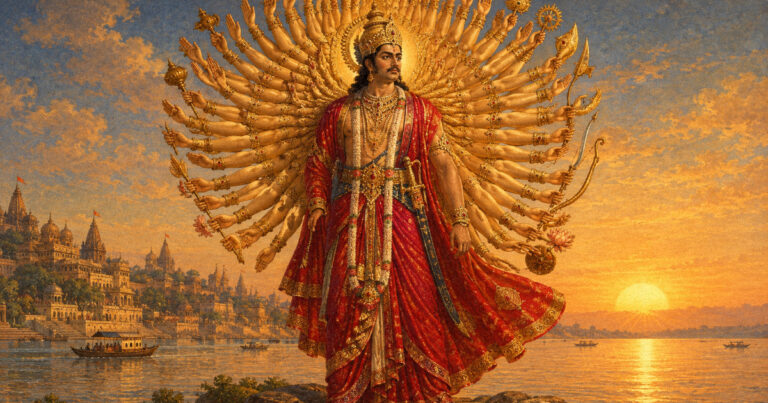
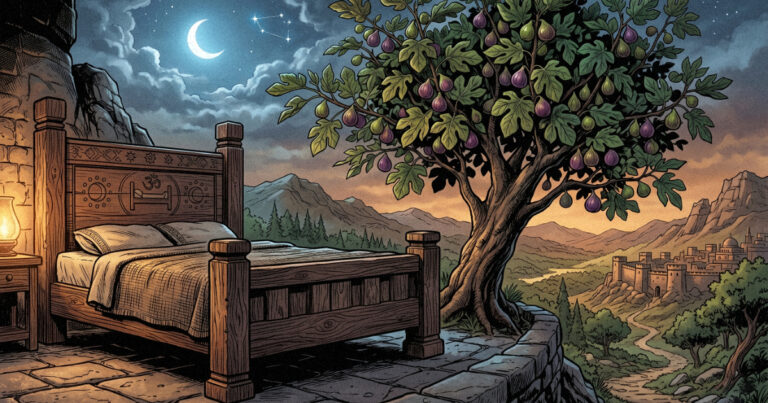
Ashadi Ekadashi is the eleventh day, or Ekadashi, of the bright fortnight of the Hindu month of Ashadha, which falls in June or July. It is also called Devshayani Ekadashi, because Devshayani means the sleep of the divine. On this day, Lord Vishnu is said to withdraw into a deep yogic rest on the cosmic ocean, resting on the serpent Sheshnaga, until he wakes again on Prabodhini Ekadashi about four months later.
That gap between the two Ekadashis is Chaturmas, literally the four months. During this period, tradition holds back major life events like weddings, housewarmings, and other big beginnings, because the presiding energy of preservation and stability is said to have turned inward. It is treated less as a pause on life and more as an invitation to slow down and turn some of that outward energy toward reflection instead.
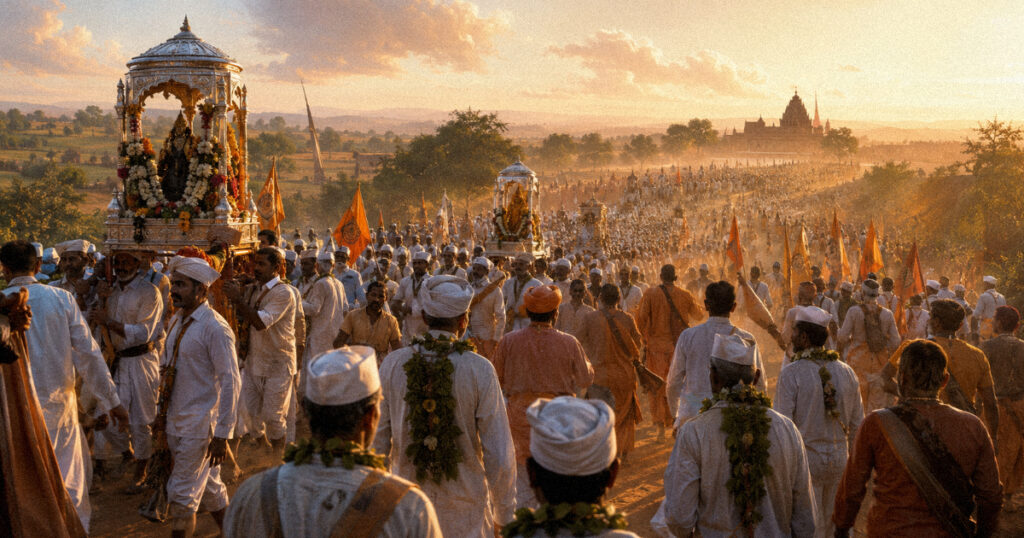
In Maharashtra, this day carries an extra layer of meaning. It marks the end of the Pandharpur Wari, a walking pilgrimage that has run for hundreds of years, where devotees called Warkaris walk for weeks carrying the palanquins of saints like Dnyaneshwar and Tukaram to the temple of Vitthal, a form of Krishna, in Pandharpur.
The mythology behind Ashadi Ekadashi
Every Ekadashi in the Hindu calendar carries its own story, and the story of Ashadi Ekadashi is one of the more human ones in the Puranas.
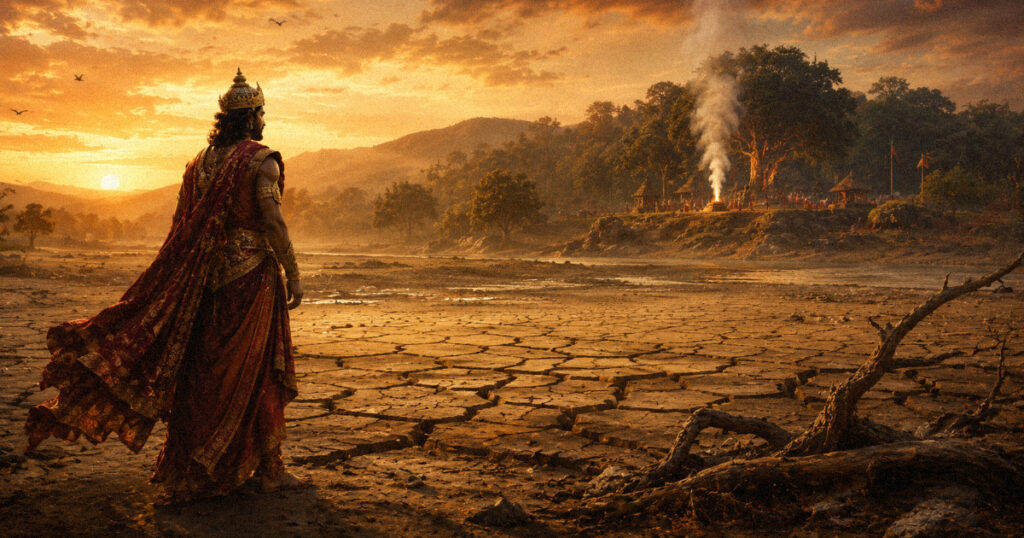
The Bhavishya Purana tells us that Lord Krishna first shared this story with King Yudhishthira, the eldest of the Pandavas, and that it had earlier been told by Brahma to his son Narada. At the centre of the story is King Mandhata, a Chakravarti ruler of the Satyug era, known for his fairness and devotion.
During his reign, a severe drought struck the land. It lasted three years. Crops failed, rivers ran dry, and the ordinary rhythms of life, including religious rites, came to a halt. Mandhata did not accept that his people should suffer without cause. He left his palace and walked into the forest, searching for an answer, until he arrived at the hermitage of Sage Angira, a son of Brahma.
The sage told him that the drought was not a random misfortune. It was the result of a ritual imbalance in his kingdom, something out of alignment with dharma. And the remedy the sage gave him was not a complicated yajna or an elaborate penance. It was simple. Observe Ashadi Ekadashi, along with his entire kingdom, with sincerity and faith in Lord Vishnu.
Mandhata returned, and the kingdom observed the fast together. The story tells us that with this act of collective devotion, the rains returned and the land was restored. The moral sits gently underneath the story rather than shouting from the top of it. It suggests that a shared, sincere act of restraint can shift something that force and wealth could not.
Why Lord Vishnu is said to rest now
The idea of a deity resting can sound strange until you place it inside the larger rhythm of the Hindu year. Ashadha marks the point where the sun’s northward movement, Uttarayana, is giving way to its southward movement, Dakshinayana. In the old texts, Dakshinayana is described as a more inward season, associated with the night of the gods.
Vishnu’s rest on the cosmic ocean during this window is a symbol as much as a story. It suggests that the universe itself is turning its energy inward, away from expansion and toward maintenance. Farmers historically used this period to let the soil recover after the first monsoon sowing. Communities used it to slow down social obligations. The mythology and the practical calendar of the time were speaking to each other.
Ashadi Ekadashi and Vedic astrology
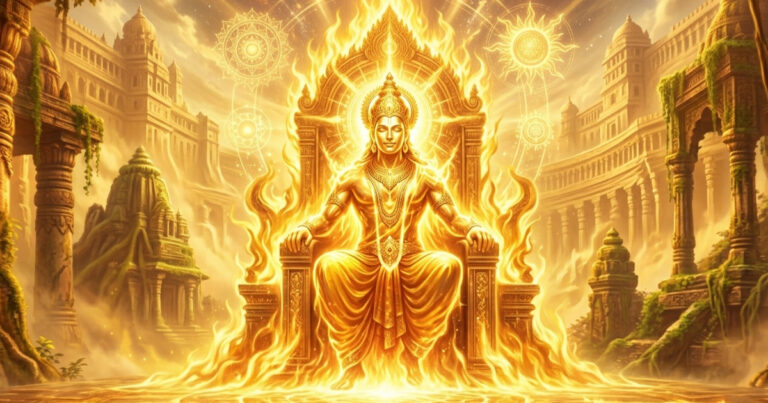
In Vedic astrology, this period lines up with a season that is naturally reflective. The sun moves through Karka and Simha during much of Chaturmas, and Guru, the planet of wisdom, expansion, and dharma, is closely tied to the meaning of this observance because Vishnu himself is considered the presiding deity of Guru’s domain of knowledge and right conduct.
Chaturmas is traditionally treated as a season better suited to introspection than to launching new ventures. This is not about the sky being unfavourable. It is more that the collective mood of this season, reinforced by the monsoon itself, tends to favour steady, inward focused work over bold new beginnings. Many people use these four months for japa, study of scripture, and simplifying their diet and daily habits, treating it as a natural checkpoint in the year rather than a strict rulebook.
If you are someone who tracks your own chart, this is also a good stretch to look at where Jupiter is transiting for you, since it colours how this period of reflection shows up in your own life. The point is not that anything is fixed in stone. It is that the season offers a natural pause, and how you use it depends on your own placements, your current dasha, and the choices you make either way.
What Ashadi Ekadashi and Chaturmas 2026 mean for your rising sign
Your rising sign, or Lagna, shapes how you personally experience a season like this, more than your sun sign does in the Vedic system. Here is a grounded look at what this Chaturmas tends to bring up for each rising sign. These are gentle themes to sit with, not predictions carved in stone.
- Aries rising: A good stretch to slow down decision making and let plans mature before you act on them.
- Taurus rising: Home and family life may ask for more of your attention. Worth leaning into rather than resisting.
- Gemini rising: A natural season for study, writing, and finishing what you started instead of chasing something new.
- Cancer rising: This period often feels close to home astrologically. A good time for inner work and rest.
- Leo rising: Worth watching your spending and your energy levels. Steady effort will serve you better than big swings.
- Virgo rising: A supportive window for health routines and cleaning up daily habits that have slipped.
- Libra rising: Relationships may come into sharper focus. Good season for honest conversations over grand gestures.
- Scorpio rising: A reflective, sometimes intense inward pull. Journaling or quiet practice can help you process it.
- Sagittarius rising: Career questions may surface. Use the season to plan carefully rather than leap immediately.
- Capricorn rising: A good time to widen your view, through study, travel plans, or simply new perspectives.
- Aquarius rising: Financial and shared resource matters may need attention. Patience pays off here.
- Pisces rising: Partnerships and close bonds are highlighted. A good season to show up consistently for people who matter.
Best practices for observing Ashadi Ekadashi
You do not need to follow every tradition to benefit from this day. Even a few of these, done with sincerity, can carry meaning.
- Keep the fast simple. Many people avoid grains and beans on this day and eat only fruits, milk, or a single simple meal. If a full fast does not suit your health, even a lighter, more mindful day of eating honours the spirit of it.
- Wake before sunrise if you can. A quiet start to the day sets the tone for the rest of it.
- Offer tulsi leaves and a lamp to Vishnu or Vitthal. This is one of the oldest and simplest parts of the ritual.
- Read or listen to the story of Ashadi Ekadashi. Sharing the story, even informally, is considered part of the observance.
- Break the fast at the right time, called Parana, usually the next morning after sunrise, rather than late at night.
- Use the start of Chaturmas to set one steady habit, rather than several ambitious ones, and try to carry it through the four months.
- Hold off on starting major life events like weddings or housewarmings if your family follows this custom, and check your local Panchang for exact dates since these shift slightly by city.
Ashadi Ekadashi is not really about pausing your life. It is about choosing where to place your attention for a season. The mythology of Mandhata’s kingdom reminds us that restraint, done together and with sincerity, can restore what force alone cannot. Whatever your rising sign, this is a fair window to ask yourself what part of your life could use less push and a little more steadiness.