
Ketu in 12 Houses in Vedic Astrology
In the celestial dance of Vedic Astrology (Jyotish), few forces are as mysterious, powerful, or misunderstood as Ketu. Known as the “South Node of the Moon,” Ketu is not a physical planet but a mathematical point where the Moon’s orbit intersects the ecliptic. It is a “shadow planet” (graha) that wields profound influence over our karma, our spiritual evolution, and our capacity for detachment.
If Rahu (the North Node) is the insatiable head of the demon, driving us toward worldly desires, ambition, and innovation, Ketu is the headless body—the tail of the serpent. It represents where we have already been, what we have already mastered in past lives, and where we are now called to let go.
This comprehensive guide explores the multifaceted nature of Ketu, its role in your birth chart, and detailed interpretations of its effects through all 12 houses.
1. Understanding Ketu in 12 Houses: The Catalyst for Moksha
To comprehend Ketu’s impact, one must look past the superficial interpretations of loss or negativity. In Jyotish, Ketu is the chief karaka (significator) of Moksha—final liberation from the cycle of birth and death. Its ultimate goal is not to punish, but to purify.
Key Attributes of Ketu:
- Detachment and Renunciation (Vairagya): Ketu creates a feeling of “been there, done that.” It dissolves attachments to the material aspects of the house it occupies, forcing a shift toward the spiritual.
- Past-Life Mastery: Wherever Ketu is placed, you possess innate skills and accumulated wisdom from previous incarnations. You don’t need to strive in this area; you simply “know” it.
- Intuition and Psychic Ability: Being headless, Ketu operates beyond logic. It governs the subconscious, granting profound intuition, insights into the occult, and vivid dreams.
- Isolation and Solitude: Ketu often pulls an individual away from the crowd, fostering a need for introspection, retreat, and silence.
When Ketu is positively aspected or placed in “benefic” houses (traditionally 3, 6, 11), it can bestow sharp intellect, sudden gains, and victory over adversaries. When afflicted or misplaced, it can cause confusion, aimlessness, or sudden disruptions.
The first six houses focus primarily on the self, the immediate environment, and personal development.
Ketu in the 1st House (Ascendant/Lagna)
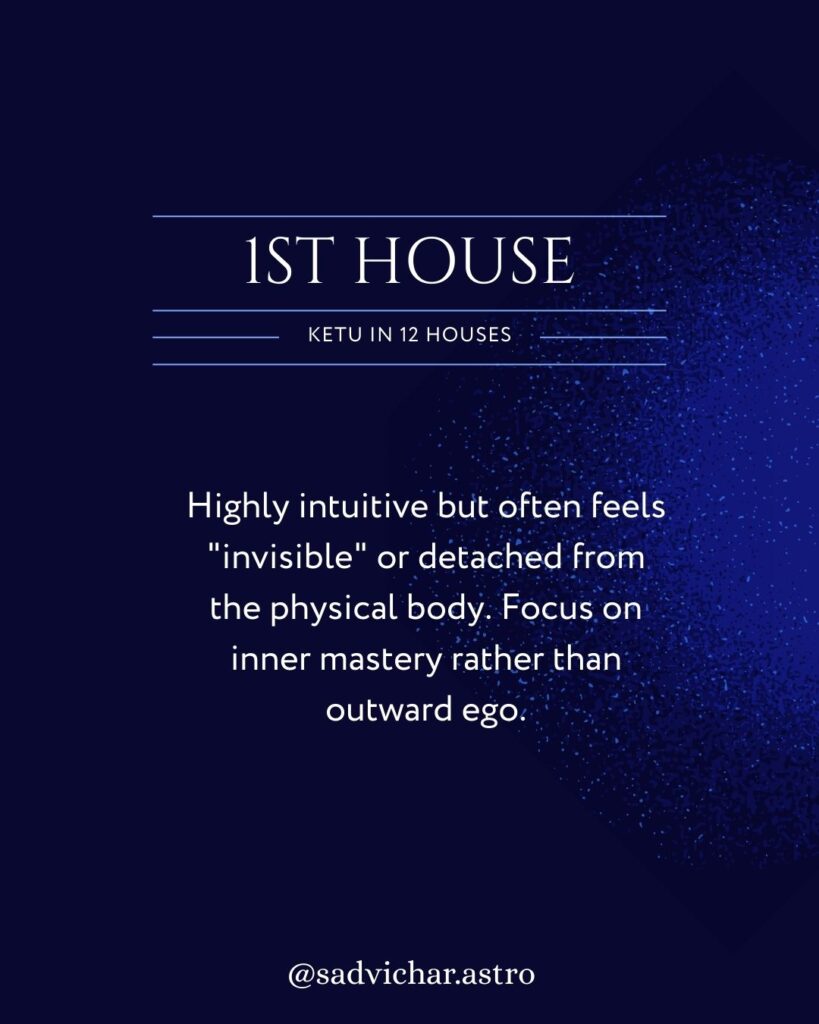
The Vibe: Detachment from Ego. With Ketu in the first house of self, the native often has a mysterious aura and an introverted personality. You may feel a strong sense of detachment from your physical body or self-image, focusing more on the spirit than the ego. You are inherently intuitive and truthful, but this placement can sometimes struggle with self-confidence or feeling misunderstood by others. True mastery comes from embracing your unique approach to life rather than seeking external validation.
- Key Focus: Inner wisdom over outward identity.
Ketu in the 2nd House
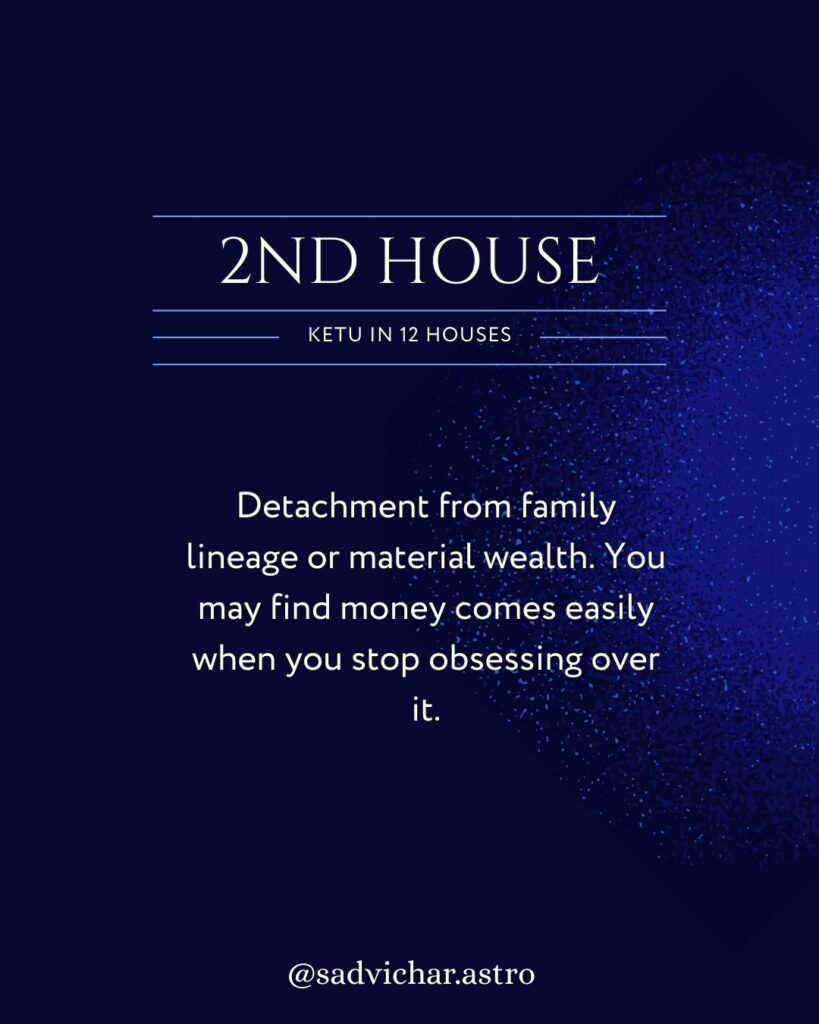
The Vibe: Spiritual Contentment. This placement influences finance, speech, and family values. Ketu here can create fluctuations in wealth or a general lack of interest in amassing possessions, pushing you to learn contentent beyond materiality. Your family lineage may feel distant, or you may find financial success comes easily only after you stop chasing it obsessively.
- Key Focus: Spiritual values over material accumulation.
Ketu in the 3rd House
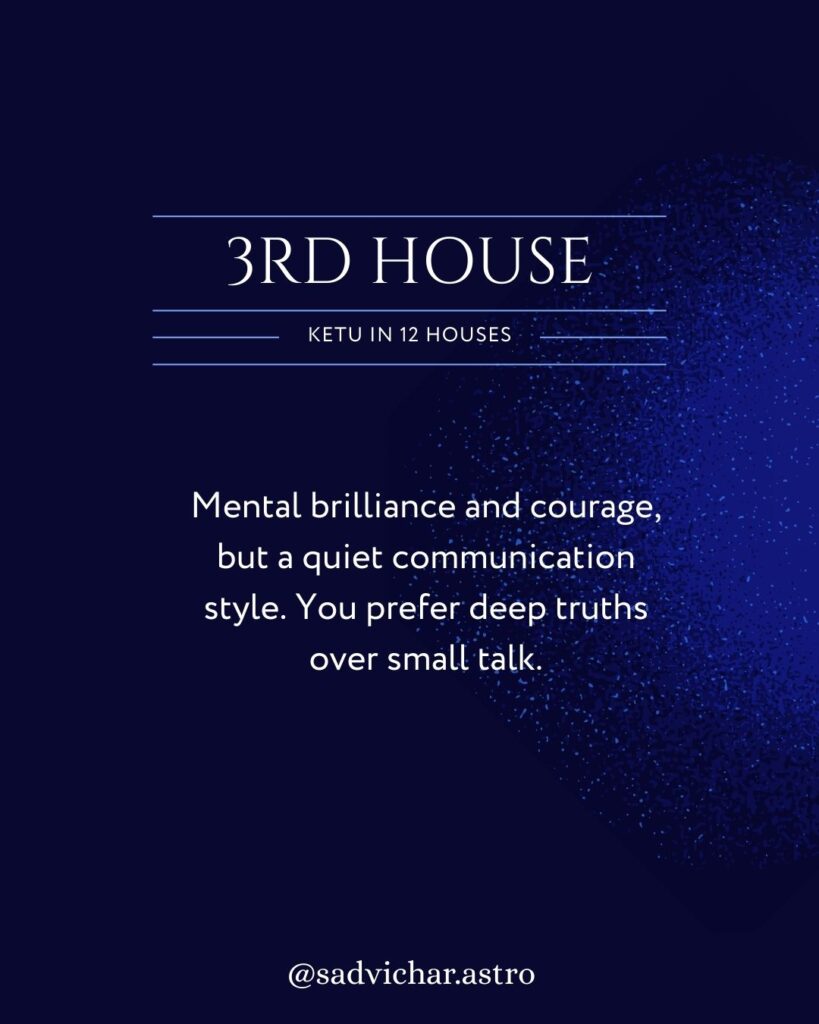
The Vibe: Courageous Introspection. Ketu in the 3rd house is often considered favorable. It bestows intelligence, courage, and a preference for deep truths over superficial communication. While it may cause strains or detachment in relationships with siblings, it provides a fierce, unconventional mental resilience and an interest in spiritual teachings or ancient knowledge.
- Key Focus: Unconventional communication and deep knowledge.
Ketu in the 4th House
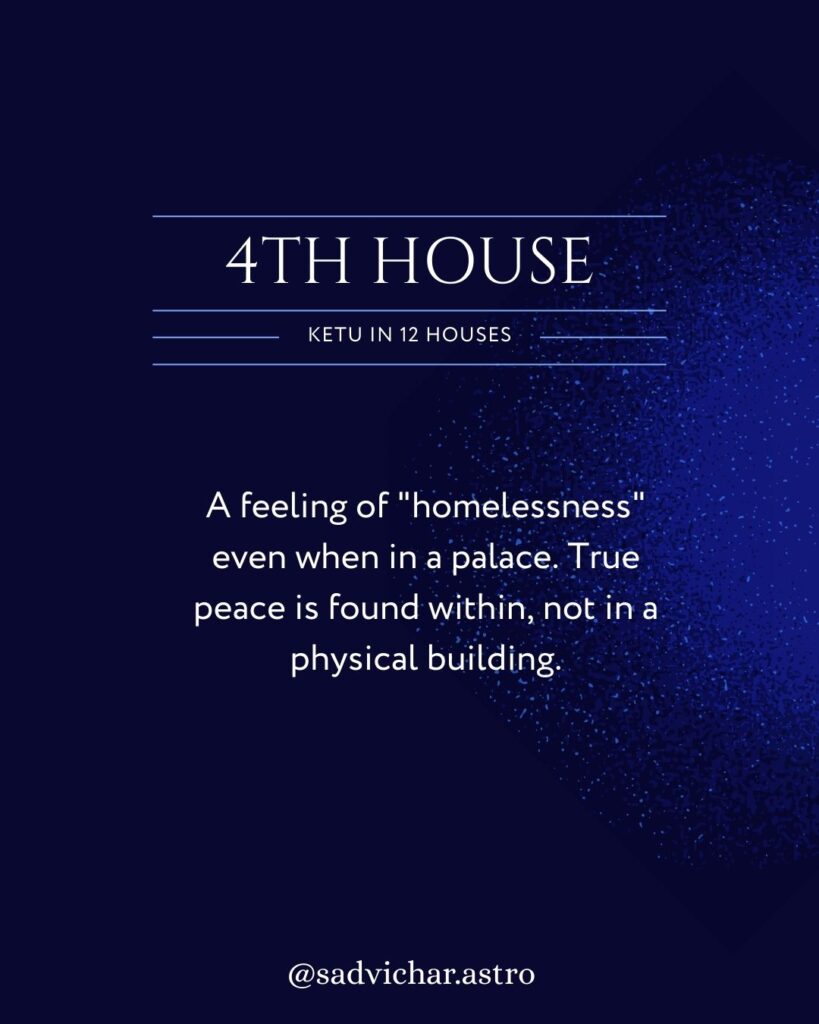
The Vibe: Finding the Inner Sanctuary. The 4th house represents home, emotions, property, and the mother. Ketu here often brings a restless feeling, as if physical homes are temporary or “not quite right.” It creates emotional independence and pushes you to find peace within through meditation or retreat, rather than relying on external comforts or familial bonds.
- Key Focus: True peace is found within, not in a building.
Ketu in the 5th House
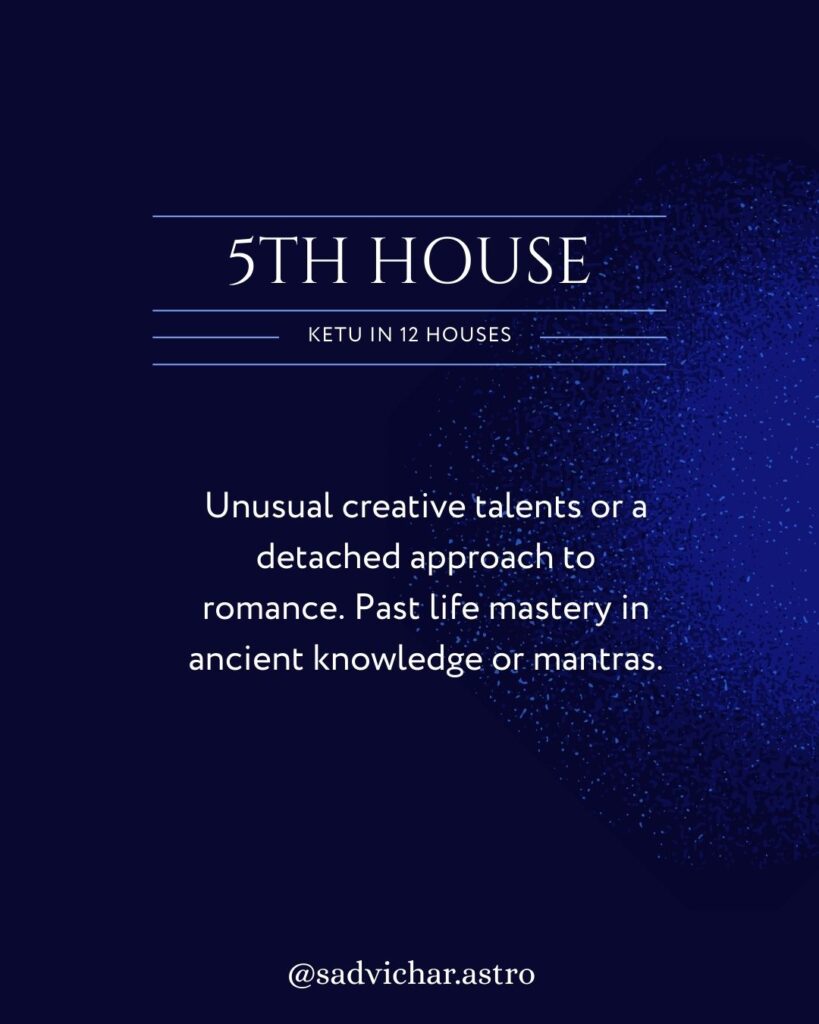
The Vibe: Non-attachment to Creation. This house governs creativity, children, romance, and higher knowledge. Ketu here can grant innate past-life mastery in occult sciences, mantras, or research, but it often brings a detached or unconventional approach to romance and creativity. It encourages deep self-expression while challenging the soul to find joy beyond traditional love and progeny.
- Key Focus: Spiritual knowledge and innate research abilities.
Ketu in the 6th House
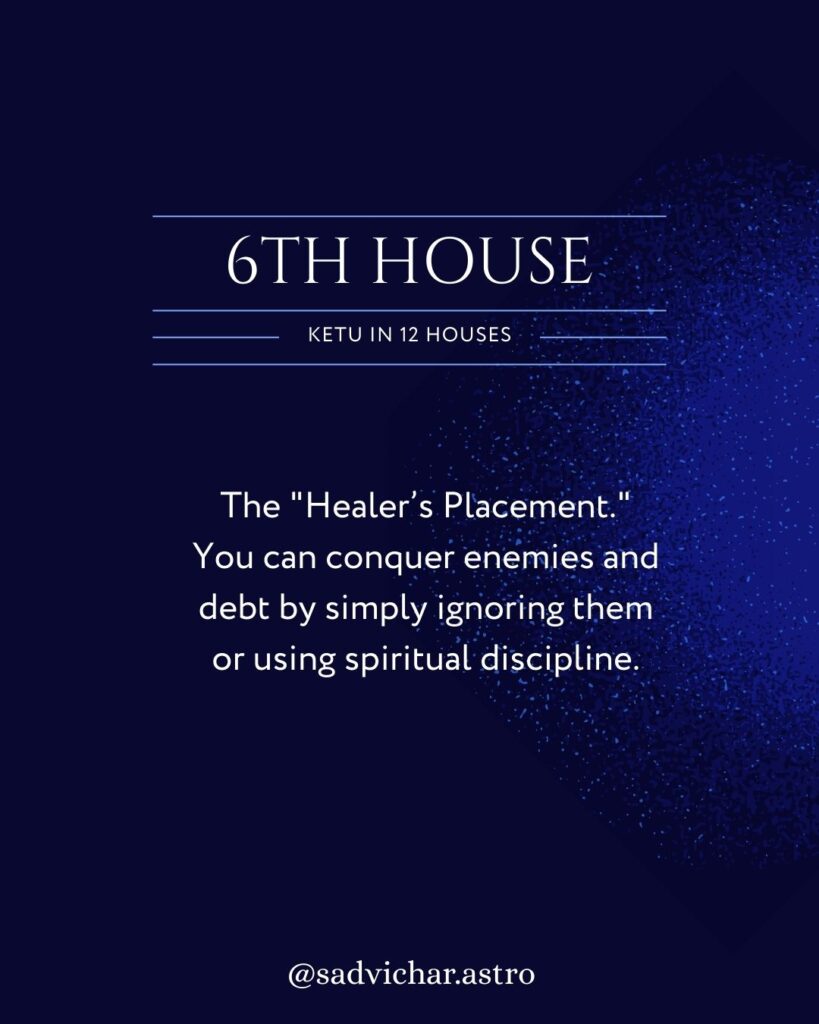
The Vibe: The Healer’s Placement. A powerful, traditionally benefic placement for Ketu. It governs daily work, health, and service. Individuals with Ketu here often have an innate ability to conquer challenges or enemies by simply ignoring them or using spiritual discipline. It pushes for spiritual routines in daily life and often indicates skills in alternative or unconventional healing methods.
- Key Focus: Spiritual discipline in daily routines.
The final six houses explore our relationships with others, our careers, society, and ultimately, our spiritual exit.
Ketu in the 7th House
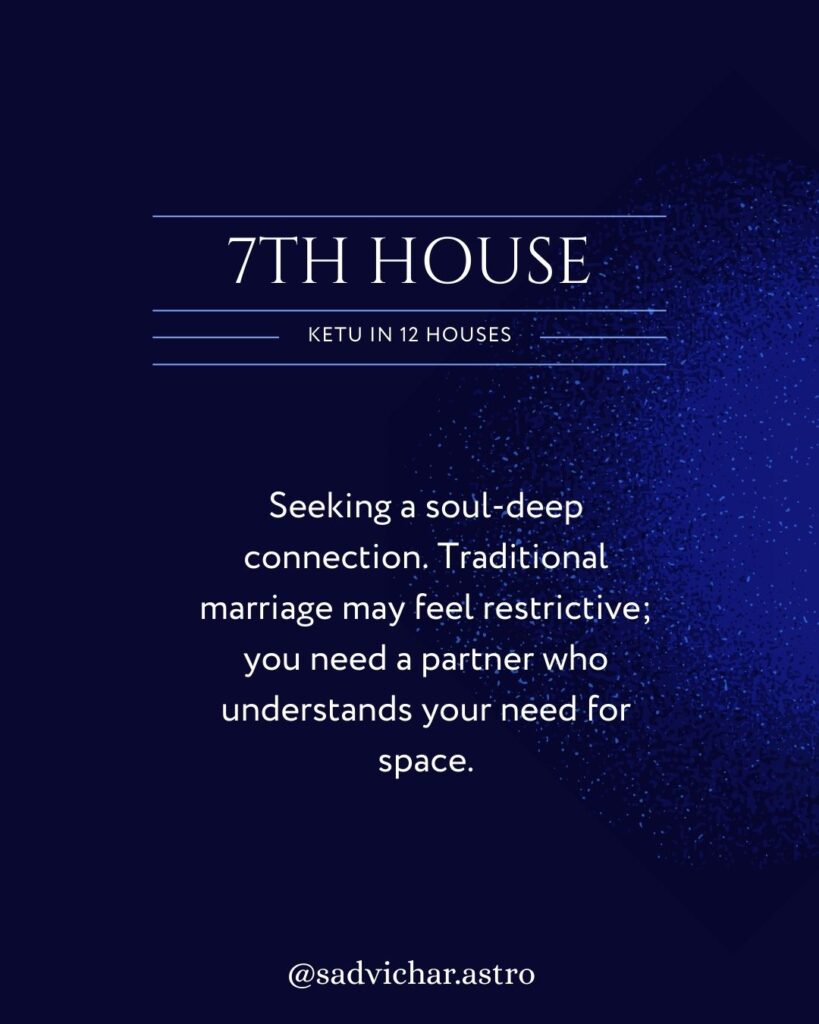
The Vibe: Soul-Deep Connections. The 7th house is the sphere of marriage, business partnerships, and public image. Ketu here seeking profound, soul-deep connections rather than transactional or superficial bonds. Traditional marriage can feel restrictive, as you need a partner who respects your need for space and spiritual exploration. You learn important lessons about balance, compromise, and unconditional love.
- Key Focus: Spiritual connection over traditional partnership.
Ketu in the 8th House
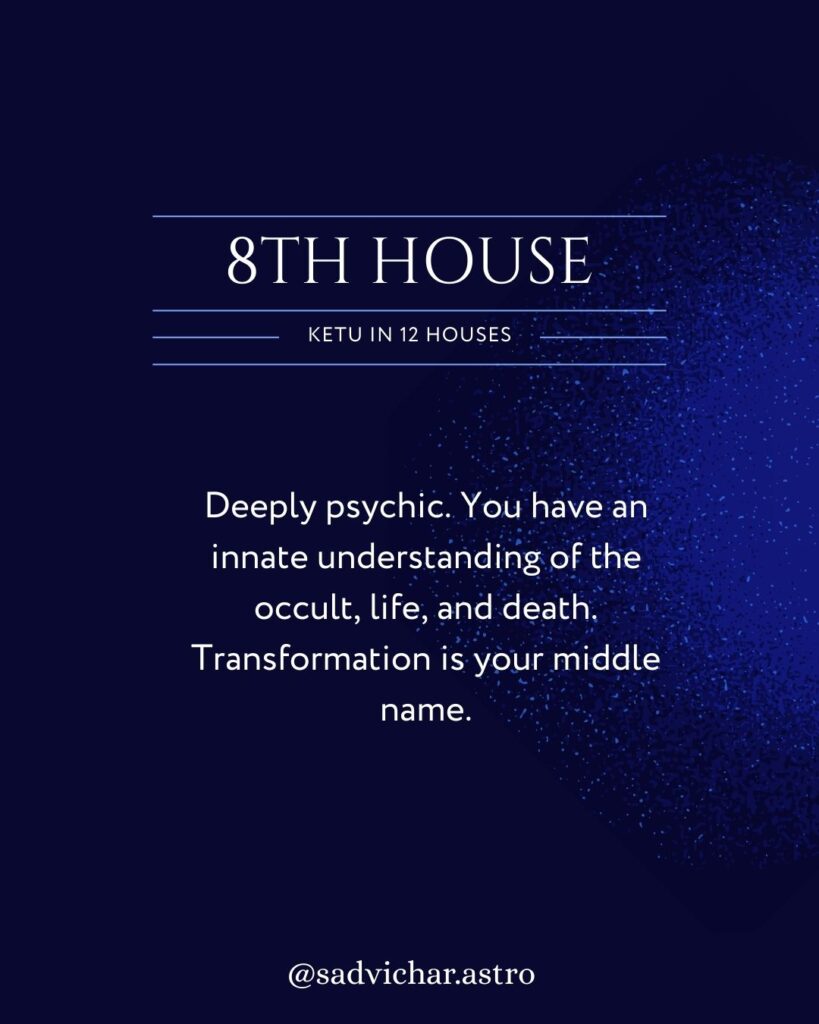
The Vibe: Guardian of Secrets. This house governs transformation, shared resources, mysteries, and death. Ketu here is deeply psychic, offering an innate understanding of the metaphysical and occult. While it may bring sudden transformations or detachment from shared material assets, it allows you to undergo profound inner changes and develop an unbreakable resilience.
- Key Focus: Deep transformation and shared occult knowledge.
Ketu in the 9th House
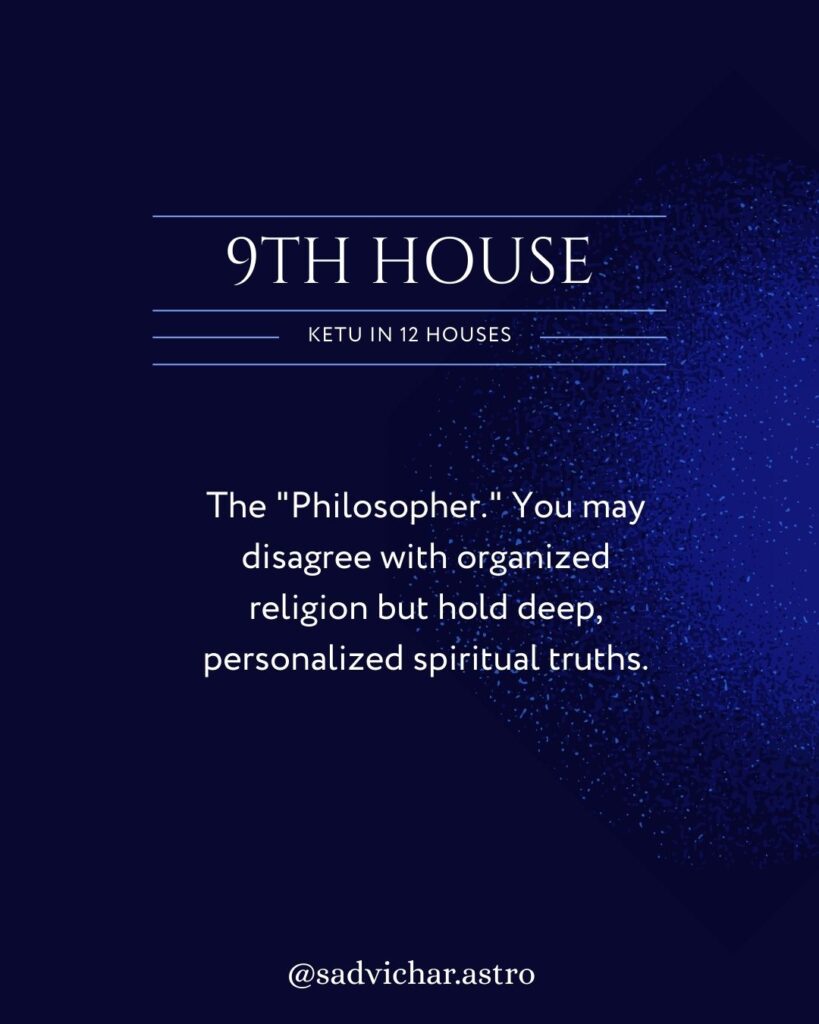
The Vibe: The Philosopher’s Search. This house governs beliefs, philosophy, higher education, and the father figure. Ketu in the 9th encourages you to question traditional religious dogma and formal education in search of personalized, spiritual truths. You may become a seeker of wisdom, traveling or studying diverse cultures, but rarely finding satisfaction in organized institutions.
- Key Focus: Self-realized truth over organized religion.
Ketu in the 10th House

The Vibe: Detached Achievement. The 10th house is the house of karma, career, and public reputation. Ketu here often indicates that you already possess strong past-life leadership or professional skills. Counterintuitively, a “don’t care” attitude toward fame actually brings you success. You work best when your career is aligned with a higher purpose rather than sheer ambition.
- Key Focus: Career as a tool for a higher cause.
Ketu in the 11th House
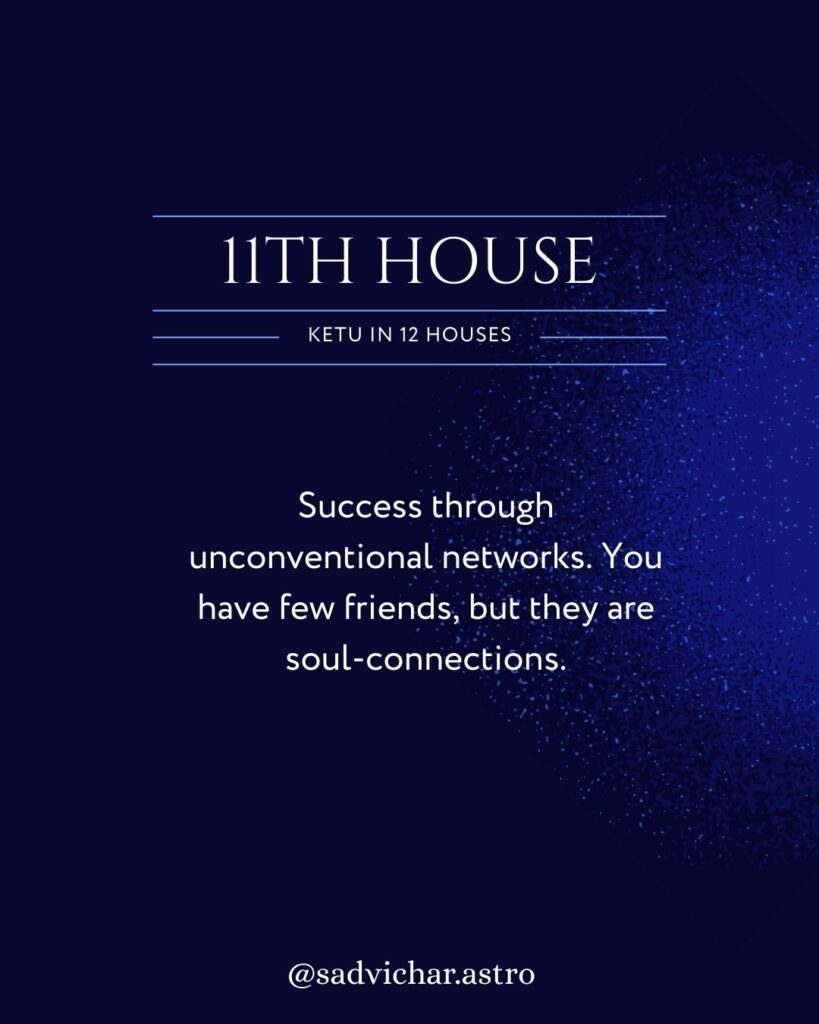
The Vibe: The Mystic Networker. governs gains, friendships, and societal impact. Ketu here provides success through unconventional networks or few, soul-deep friendships. You may have a religious instinct that helps you navigate adversity and a preference for charitable acts without seeking credit. It gives gains but minimizes the desire to enjoy them materially.
- Key Focus: Gains through unconventional networks.
Ketu in the 12th House
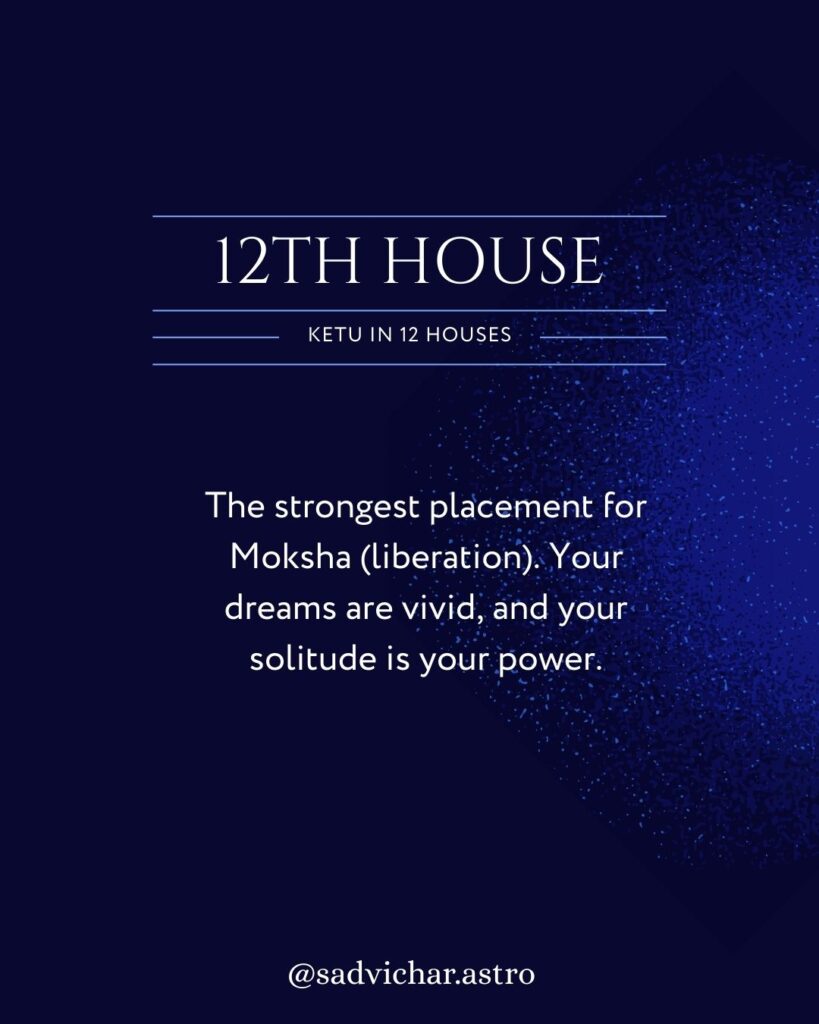
The Vibe: The Final Liberation. The 12th house is the house of solitude, expenditure, and Moksha. This is considered Ketu\’s strongest and most sacred placement. It signifies an introvert with strong spiritual propensities. It indicates vivid dreams, solitude as a source of power, and a direct channel for spiritual enlightenment. While it may cause a loss of ancestral property or vision issues, it points directly toward liberation.
- Key Focus: Solitude as power and final liberation.
3. How to Work with Ketu’s Energy
Working with Ketu isn’t about fighting against the detachment; it’s about understanding where that energy is pointing you.
Practical Advice for Ketu Placements:
- Don’t Fight the Void: If Ketu makes an area of life feel “empty,” stop chasing it. Its goal is to teach you contentent with or without that material aspect.
- Lean into Rahu: Look to the house directly opposite Ketu—that is where Rahu sits, indicating the area of intense hunger and karmic exploration in this lifetime. Balancing the two is the goal.
- Embrace Meditation: Meditation is the universal remedy for Ketu. It honors its need for introspection and connects you directly to the intuitive, non-logical wisdom it provides.
- Help Without Credit: Charitable acts done silently (especially for street dogs or those in profound need) appease Ketu’s energy.
Traditional Remedies (Jyotish):
- Worship Lord Ganesha: As the deity who removes obstacles, Ganesha is closely associated with Ketu. Reciting Ganapati Atharvashirsha is often recommended.
- Cat’s Eye Gemstone: Wearing a natural Cat’s Eye gemstone, after consulting an experienced Vedic astrologer, can balance Ketu’s shadow influence.
Conclusion
Ketu is the part of your horoscope that doesn’t want anything from this world. Understanding this shadow planet is not just about predictive accuracy; it is about recognizing the soul’s journey toward its ultimate destination. Whether it is in your house of self, your house of career, or your house of liberation, Ketu is always calling you to release what you no longer need so that you may receive the gift of true spiritual mastery.
Ever wonder what your birth chart says about you? Schedule a session with us.



One Comment